

Rodent Control in Josephine & Jackson Counties
Hearing scratching after dark? Finding droppings in the garage? Something treating the attic like a studio apartment? VIP Pests looks for the rodents, the entry points and the conditions keeping them around.
- ✓ Rat Control
- ✓ Mouse Control
- ✓ Rodent Exclusion
- ✓ Josephine County
- ✓ Jackson County
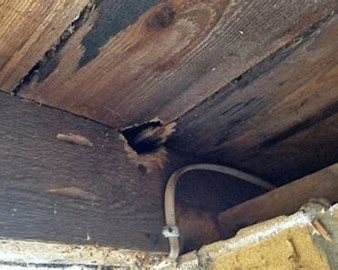
You may hear them before you see them.
Rats and mice are common pest problems throughout Southern Oregon, but they often spend much of their time out of sight.
Attics, crawlspaces, garages, wall voids, storage rooms and outbuildings can provide protected travel and nesting areas.
That means a homeowner may notice droppings, scratching sounds, damaged materials or odors long before actually seeing a rodent.
The question is not only “Where is the rat?”
A useful rodent inspection looks at the larger property conditions surrounding the activity.
- Likely entry points
- Attic and crawlspace activity
- Wall and utility penetrations
- Droppings and nesting evidence
- Gnawing and damaged materials
- Food and water sources
- Exterior habitat and access routes
Clues that something has moved in.
Rats and mice leave evidence behind. The pattern of that evidence helps determine where activity may be concentrated.
Scratching at Night
Movement or scratching sounds in ceilings, walls, attics or crawlspaces can indicate rodent activity.
Droppings
Droppings around cabinets, storage areas, garages or utility spaces are a common warning sign.
Gnaw Damage
Rodents may gnaw on wood, packaging, insulation and other materials as they move through a structure.
Persistent Odors
Strong or unusual odors in enclosed areas can sometimes accompany established rodent activity.
Damaged Storage
Food packaging, stored materials or boxes may show chewing or disturbance.
Nesting Material
Shredded paper, insulation or other soft materials may be gathered into protected nesting areas.
Rodents can do more than steal the dog food.
Established rodent activity can affect building materials, stored goods and sanitation conditions inside a home or business.
Rats and mice gnaw regularly and may damage wood, packaging, insulation and other materials.
Areas used by rodents can accumulate biological material that requires appropriate cleanup precautions.
Nesting materials and prolonged activity can create unpleasant conditions inside enclosed spaces.
Food is food. Rats aren’t picky.
Southern Oregon properties often have plenty of food sources outdoors, especially rural, suburban and agricultural properties.
A rodent problem does not automatically mean a property is dirty. Sometimes the issue is simply that food, shelter and an easy entry point all exist in the same place.
That is why VIP looks beyond the immediate infestation and considers what may be encouraging rodents to stay nearby.
Getting them out matters. Keeping them out matters too.
Rodent control is incomplete if the property still provides obvious ways for rats or mice to re-enter.
VIP’s inspection background is particularly useful here because exclusion requires looking at the structure itself — not just where a trap can be placed.
Depending on the property and the conditions found, recommendations may involve entry-point correction, sanitation changes, food-source management or other preventive measures.
Where can rodents get inside?
Inspection may include common structural access areas such as:
- Foundation and crawlspace openings
- Utility penetrations
- Garage and door gaps
- Damaged vents or screening
- Roofline and attic access points
- Gaps around additions and structural transitions
- Openings around outbuildings and storage areas
Find the activity. Find the way in.
Rodent control should address the animal, the structure and the conditions supporting the infestation.
Inspect
Look for droppings, damage, nesting areas, travel routes and likely entry points.
Evaluate
Determine where activity is concentrated and which property conditions may be contributing.
Control
Use a targeted rodent-control approach based on the activity and property conditions identified.
Exclude & Prevent
Address entry points and recommend practical changes that can help reduce repeat activity.
A trap can catch a mouse. It can’t seal the hole.
What DIY may address
Traps can be useful, but catching individual rodents does not automatically tell you how many are present, how they entered or what is attracting them.
- A visible mouse or rat
- One active travel route
- Immediate short-term activity
- A portion of the infestation
What VIP looks for
The goal is to understand the property as a system rather than treating every rodent sighting as an isolated event.
- Interior and exterior evidence
- Likely entry points
- Attic and crawlspace activity
- Food and water sources
- Nesting conditions
- Exclusion opportunities
Serving Josephine & Jackson Counties.
Valley Inspections & Pests provides rodent-control services for homes and businesses across the primary Rogue Valley service corridor.
Josephine County Rodent Control
Grants Pass is VIP’s home base, with service throughout surrounding communities in Josephine County.
Jackson County Rodent Control
VIP also serves residential and commercial properties throughout the central Jackson County and Rogue Valley corridor.
Southern Oregon pest experience, beyond our own website.
Valley Inspections & Pests was featured in a Rogue Media Solutions guide covering pest control in Josephine and Jackson Counties, including common Rogue Valley pest concerns and local service considerations.
Questions Rogue Valley property owners ask about rats and mice.
How do I know if I have rats or mice?
Common clues include droppings, scratching sounds, gnaw marks, damaged food packaging, nesting material and activity in attics, crawlspaces, garages or storage areas.
Why do rodents keep coming back?
Recurring activity can happen when entry points, food sources or favorable nesting conditions remain available. Removing individual rodents without addressing those factors may not solve the larger problem.
Does VIP provide rodent exclusion?
VIP evaluates structural entry points and prevention opportunities as part of its inspection-first rodent-control approach. Recommendations depend on the conditions found at the property.
Do chicken feed and bird feeders attract rats?
Accessible feed and spilled seed can provide reliable food sources for rodents. Outdoor pet food, fallen fruit and other organic material may contribute as well.
Does VIP provide rat and mouse control in Grants Pass and Medford?
Yes. Valley Inspections & Pests serves the primary Rogue Valley corridor across Josephine and Jackson Counties, including Grants Pass, Medford and surrounding communities.
Do you provide commercial rodent control?
Yes. VIP serves residential properties as well as rentals, multifamily housing, restaurants, offices, shops, agricultural structures and other commercial facilities.
Does VIP remove raccoons, possums or other wildlife?
No. VIP handles rats, mice and smaller rodent pest issues but does not provide wildlife trapping or relocation services for animals such as raccoons or possums.
Rats or mice in the property? Let’s find out how they got there.
Call Valley Inspections & Pests for rat and mouse control across Josephine and Jackson Counties. VIP will inspect the activity, look for entry points and explain the next step that makes sense for your property.
Rat & Mouse Control in Josephine & Jackson Counties
Vallinspection27@gmail.com